One of the world’s most experienced fistula surgeons is illiterate. I found that out when I went to a screening of a short film called Fistula Hospital: Healing and Hope at the Frontline Club in Paddington. Her name is Mamitu Gashe, and she was a patient at the Addis Ababa Fistula hospital. After her operation […]
Cheryl Rofer: Is there a leak at Fukushima #3?
We simply don’t know. There are enough radionuclides in the outflow to the sea and in the water in the plant that it looks like a leak is possible, but there are too many other things that we don’t know. If there is a leak, it is not a big one. It’s not a big […]
Richard Smith: Might copies of PLoS ONE change journals forever?
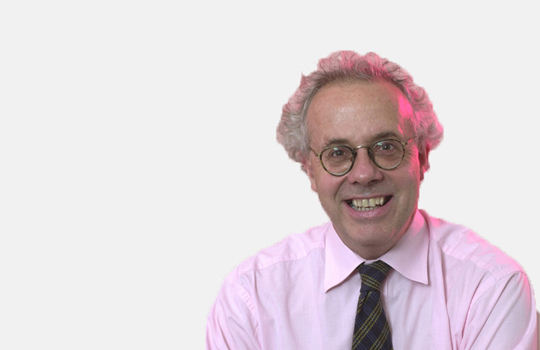
I continue to be amazed that despite the appearance of the internet, which some have compared with the invention of fire, our methods for disseminating scientific studies are essentially the same as they were 50 years ago. We still have journals, and, although papers have electronic versions, those papers are indistinguishable from those of 50 […]
Martin McShane: A confusion of choice.
I chaired the specialised commissioning group last week which was fascinating (and intense work). Ranged around the table were people skilled and experienced in public health, planning, procurement, finance, and a representative of the public who brought common sense and sensible challenge. One of the key issues we debated was whether patient choice could be […]
Ryuki Kassai: Update from Fukushima – the second seven days of the disaster
First of all, I want to express my sincere gratitude to those who provided us with useful information, who kindly donated to us, who warmly encouraged us, who thoughtfully conveyed our messages abroad, and who continue to pray for Japan after the disaster. […]
Tiago Villanueva: Does medicine cater for a truly “global” career?
I was inspired during medical school by Mark Wilson’s “Medics’s guide to work and electives around the world,” which conveys the core idea that medicine can be a “passport to the world.” But at first glance, I feel you can’t really compare a conventional medical career with the often apparently more glamourous careers in business, […]
Cheryl Rofer: Radiation exposure standards – some hard judgments
Radioactive decay is inherently probabilistic. It’s not possible to point at a particular unstable atom and predict when it will decay. Further, some types of unstable atoms have more than one path for decay; it’s also not possible to predict the path of a single atom. The behaviour of large numbers of atoms, however, is […]
Richard Lehman’s journal review – 28 March 2011
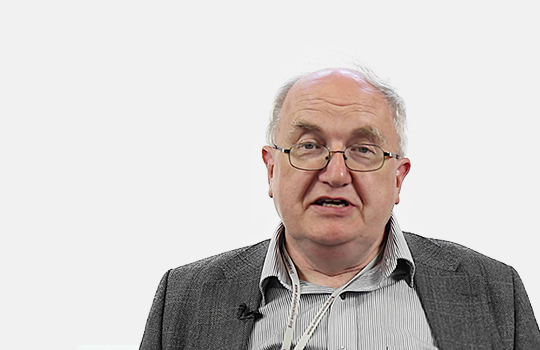
JAMA 23-30 Mar 2011 Vol 305 1165 In 1941, there was a rumour that the Germans were buying up large quantities of bovine adrenal glands from Argentina so as to produce a substance that boosted the flying powers of Luftwaffe pilots. Intense efforts to isolate this substance followed, but the war was long over by […]
David Kerr: Deus ex machina
Forget complementary therapies, the big question is can engineering succeed where traditional medicine has failed? Anyone following the online technology bible “TechCrunch” might be persuaded by this idea. Here in the US and on the West Coast in particular, the belief is growing that the combination of money and mathematical and engineering brilliance (and also […]
Research highlights – 25 March 2011
“Research highlights” is a weekly round-up of research papers appearing in the print BMJ. We start off with this week’s research questions, before providing more detail on some individual research papers and accompanying articles. What are the comparative cardiovascular effects of rosiglitazone and pioglitazone in patients with type 2 diabetes in real world settings? Does […]